
The Epstein Ledger
Redactions, Revelations, and the Unfinished Dossier


This essay reviews the documents released over the past month. All previous reporting on this topic can be found in my Decoding Epstein.
“I didn’t see it myself, but I was told by some very important people that not only does it absolve me, it’s the opposite of what people were hoping, you know, the radical left,” claimed President Donald Trump on January 31, 2026.
He was responding to the release of the latest batch of “Epstein Files” from the Department of Justice (DOJ). A day earlier, the DOJ released over 3 million documents as well as recordings and images related to the now deceased convicted sex offender and financier Jeffrey Epstein. Epstein was a shadowy figure whose wealth and influence positioned him at the center of international finance, intelligence, and elite global cooperation.
Contrary to the administration’s claims of absolution, these documents do not undermine the standing allegations; in fact, they strengthen them. The caches released since December 2025 reveal Epstein as a man whose appetite for sex and power allowed him to cultivate a network of relationships that, when coupled with his communications, place him at the intersection of global intelligence gathering, blackmail, and high-level financing for the world’s most powerful individuals.
Strategic Obstruction: The War Over Redactions and Missing Records
While the White House was legally mandated to release these documents by December 19, 2025, under the Epstein Files Transparency Act, a bill Trump signed into law, the rollout has been defined by delays and controversy. The administration’s “compliance” with the law has been questionable at best. Despite White House claims that this batch fulfills their legal obligations and concludes the file dumps, millions of documents remain hidden. The DOJ is estimated to hold at least three million more pages, and Senator Ron Wyden continues to fight for the release of critical financial records. Furthermore, files from the Epstein estate have already begun leaking to outlets like Drop Site News, much to the chagrin of the Trump Administration.
To make matters worse, on Christmas Eve 2025, the DOJ abruptly announced the discovery of “a million more documents” related to the Epstein case. This reversal came just after the department had publicly claimed that nothing in the existing files warranted further investigation. Reporting indicates that the news of the discovery left President Trump furious, as the sudden influx of evidence directly contradicted the administration’s narrative that the matter was settled.
The release process itself has been a catastrophic failure of basic media literacy and data security. Internal emails revealed the DOJ was scrambling for holiday volunteers to handle redactions, leading to thousands of failures that have resulted in death threats against survivors. The administration initially claimed they were withholding files to protect survivors; however, the reality has been the opposite. Numerous survivors’ names were left unredacted, and explicit images, including ones where survivors are nude, were released without protection. As a result, survivors report receiving death threats.
In some instances, “redacted” text could be revealed simply by copying and pasting the document from one file to another, as the government failed to properly flatten the digital files. In perhaps the most embarrassing oversight, Drop Site News managed to access a batch of files early simply by guessing the government’s insecure web address. The administration’s haphazard approach suggests either a profound lack of technical competence or a deliberate attempt to muddy the waters of a historic transparency effort.
The Blackmail Engine: Extortion as a Tool of Global Policy
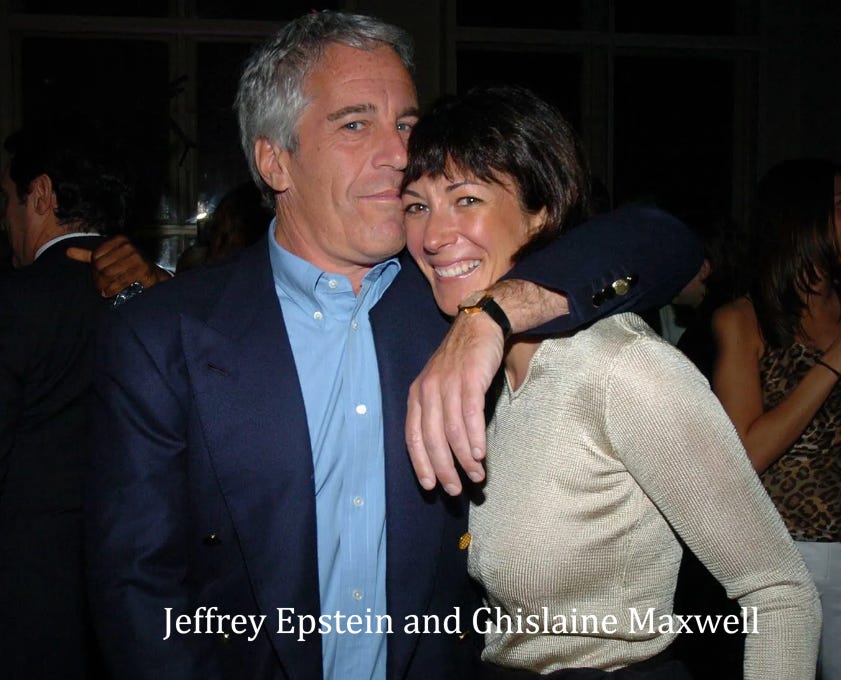
The portrait of Jeffrey Epstein that emerges from the latest document release is one of a man who integrated sexual predation with sophisticated methods of international influence. It is now clear that Epstein leaned on a devoted coterie of employees and associates to facilitate his operations. Most notably, British socialite Ghislaine Maxwell worked to secure a steady supply of minor victims, often enlisting the victims themselves to recruit other girls under the false pretense of providing massages. His Amazon purchases, including orders for schoolgirl uniforms and specialized medical devices, appear to substantiate these predatory behaviors.
Beyond his sexual crimes, Epstein’s personal history suggests a deep preoccupation with surveillance and tradecraft. His purchase history includes an unusual fixation on optics, with records showing he ordered seven pairs of high-end binoculars to his Manhattan home, which was equipped with cameras, over a five-year period. This interest in monitoring others is reinforced by a 2017 Federal Bureau of Investigation (FBI) informant claim that Epstein employed a personal hacker. The hacker in question was allegedly an Italian citizen who specialized in developing offensive cyber tools and zero-day exploits for mobile devices, which many observers view as evidence that Epstein was actively collecting digital intelligence on his powerful associates. Adding to the aura of international espionage, investigators discovered a fraudulent Austrian passport in Epstein’s safe that featured his photograph under the alias Marius Robert Fortelni and listed his residence as Saudi Arabia.
While it remains uncertain whether these surveillance tools served as the foundation for a strategic global blackmail scheme, the files provide concrete evidence of Epstein engaging in direct attempts at extortion. The files provide a concrete example involving Microsoft’s Bill Gates, whom Epstein reportedly attempted to extort regarding an extramarital affair. Draft emails discovered in the files show Epstein writing to himself as if preparing messages for Gates. Within the files, a draft resignation letter from the Bill & Melinda Gates Foundation appears to serve as a tool for extortion, citing the procurement of medication for Gates to manage the consequences of sexual encounters with a Russian women. Another draft accused Gates of ending their friendship while repeating lurid claims about a sexually transmitted infection. While spokespeople for Gates have denied these allegations, it has been widely reported that these ties contributed to the dissolution of his marriage to Melinda French Gates.
Perhaps even more damning is an exchange from 2015 in which Epstein reached out to a Russian contact for advice on how to neutralize a woman who was allegedly attempting to blackmail a group of powerful businessmen in New York. Epstein provided the woman’s specific address writing
“how are you , I need a favor , there is a russian girl from moscow. , she is attempting to blackmail a group of powerful biznessman in New York, it is bad for business for everyone involved. she arrived new york saturday of last week staying at the Four Seasons. on 57 street. . Suggestions?”
This interaction has led many to view Epstein not just as a financier, but as a point person for intimidating or silencing potential whistleblowers.
The documents also reignite the controversy surrounding Epstein’s death, which was officially ruled a suicide but has been plagued by questions regarding malfunctioning cameras and the absence of cellmates. The files reveal that at the time of his death, investigators did not believe the note he left was a suicide note. Furthermore, the timeline regarding when cameras stopped and started working remains riddled with inconsistencies between government statements and the recently released footage.
Complicating the record further are several fraudulent documents that surfaced during the investigation, including a fake suicide video found on the dark web and a letter purportedly written by Epstein to serial child molester Larry Nassar. The letter, which referenced the President’s own preferences, was postmarked three days after Epstein’s death and dismissed by the DOJ as a forgery.
Ultimately, the most significant challenge to the suicide conclusion is the evidence of Epstein’s mindset in his final days. Documents show that less than two weeks before he died in 2019, his attorneys met with Manhattan federal prosecutors to discuss a potential resolution of his case. An FBI summary explicitly states that on July 29, 2019, the defense and prosecution discussed the possibility of Epstein’s cooperation. This revelation suggests that at the very moment Epstein was considering sharing what he knew about his powerful network, the security systems meant to keep him alive suffered a total and convenient collapse. This has led some, such as Epstein’s brother to conclude that suicide was not the cause of death.
Pardon the interruption! I just wanted to take a moment to thank all of my subscribers. A special shout-out to the paid members who help me bring this information to life every week. If you’d like to support the newsletter, you can become a paid subscriber for just $5 a month. If you can’t swing that right now, no worries! Liking, commenting, and sharing on social media helps just as much. Thanks for being here, and enjoy the rest of the read!
The Web of Prestige: Academia, Entertainment, and Intellectual Blackmail
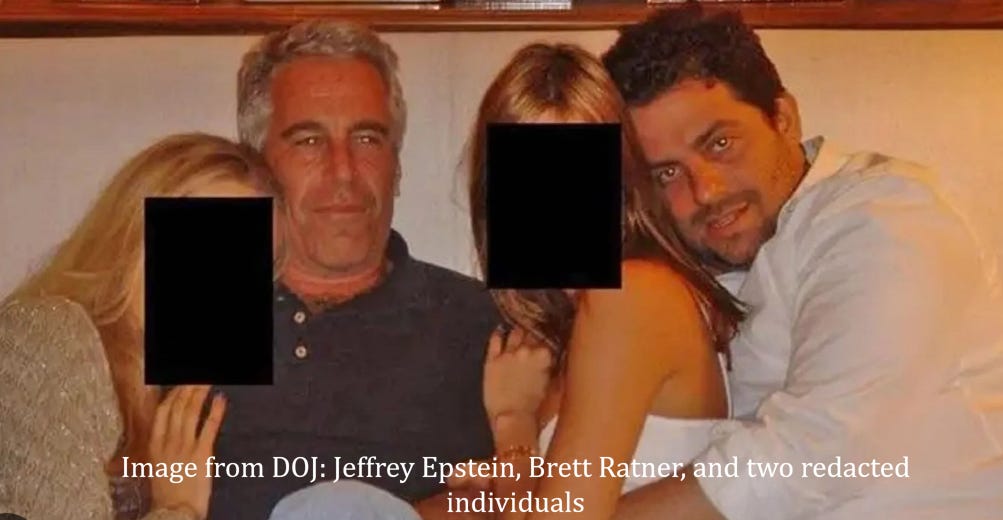
The newly released documents extend far beyond Epstein’s immediate circle, revealing a sprawling network of influence that reached into the highest echelons of academia, entertainment, and international diplomacy. In the academic world, records confirm contact with Harvard University’s Steven Pinker and Martin Nowak, while Case Western Reserve University physics professor Lawrence Krauss reportedly sought Epstein’s advice on responding to sexual misconduct allegations. Epstein also maintained surprisingly candid interactions with Harvard’s Larry Summers—whose recent resignation from the OpenAI board and leave from Harvard followed the release of files detailing their close correspondence. In these exchanges, Summers expressed personal frustrations to Epstein regarding the shifting Democratic Party landscape and his children’s preference for Bernie Sanders' platform. Perhaps most bizarrely, records show that Epstein sent DNA test kits to both Noam Chomsky and Woody Allen, a detail that adds a strange layer of personal biological inquiry to his long-standing intellectual associations.
The entertainment and sports industries were similarly entangled in this web of correspondence. Brett Ratner, the director behind a recent documentary on Melania Trump, appears in the files through a photograph with a young girl, while Casey Wasserman, the head of the Los Angeles Olympics organizing committee, is shown to have exchanged provocative emails with Maxwell. In these messages, Wasserman openly expressed his desire to see Maxwell in leather attire, and she in turn offered him a massage designed to drive a man wild. Though Wasserman has since expressed deep regret and claimed his interactions occurred long before her crimes were known, the emails highlight the casual nature with which Epstein’s inner circle integrated into elite social circles.
Similarly, New York Giants co-owner Steve Tisch appears in hundreds of documents from 2013 that suggest Epstein was facilitating introductions between Tisch and various women. These exchanges included Epstein providing personal assessments of the women’s appearances and backgrounds, with Tisch participating in discussions about their professional status and trustworthiness.
Media and journalism were not immune to this influence, as evidenced by Epstein’s relationship with author Michael Wolff. The files suggest that Epstein acted as an informal editor for Wolff, specifically refining passages meant to damage Trump’s public image by framing his real estate business as a vehicle for money laundering. In a contradictory twist, another email from Epstein to Wolff claimed that Trump had visited Epstein’s home numerous times while a specific woman worked at Trump’s Mar-a-Lago property, yet Epstein noted that Trump “never got a massage.” The files also shed light on the priorities of media figures like CBS contributor, physician and author Peter Attia, who allegedly prioritized a meeting with Epstein over his own wife’s pleas to join her at the hospital where their infant son was being treated for a life-threatening illness.
The Fixer’s Reach: Bridging British Royalty and Middle Eastern Diplomacy
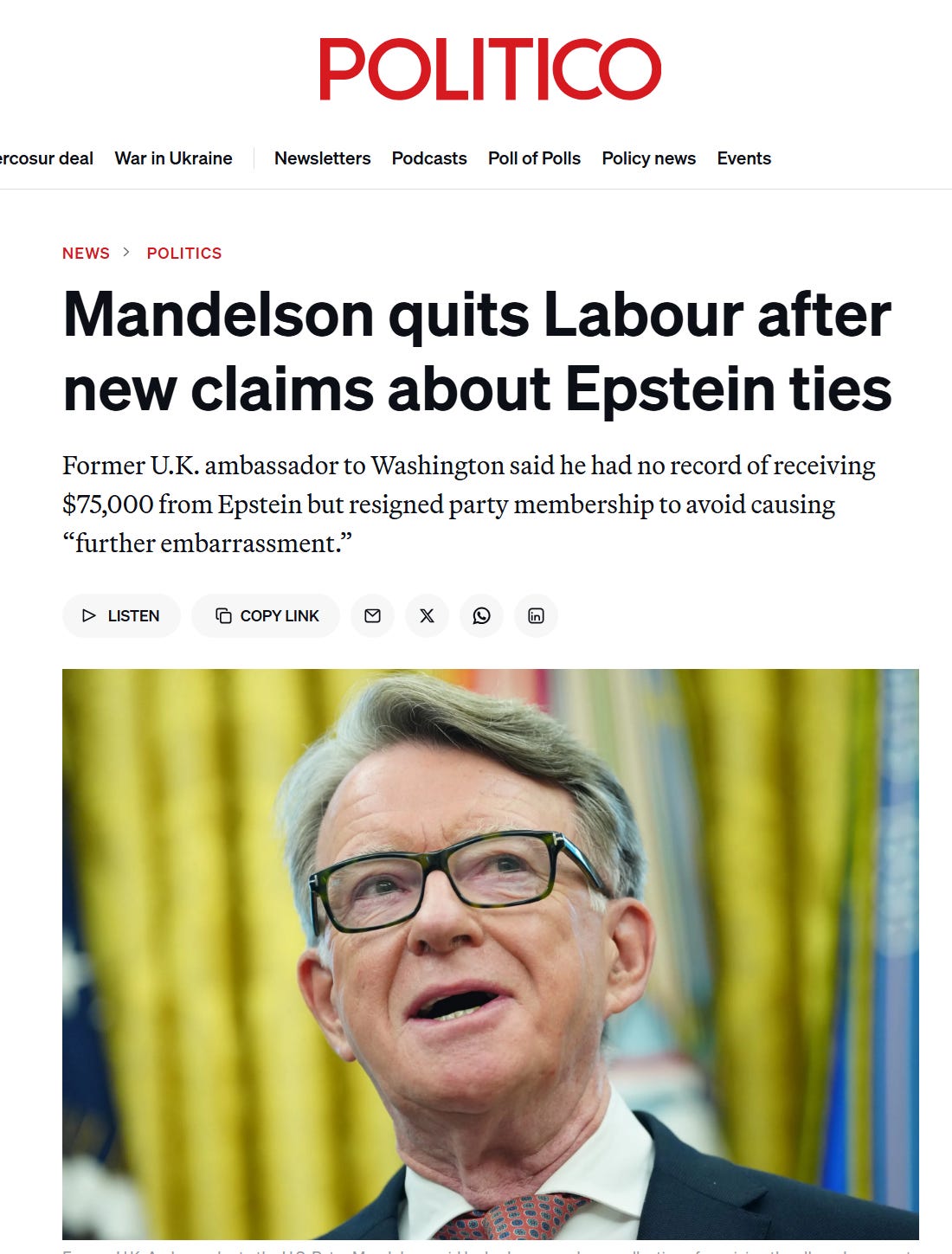
The documents further illuminate Epstein’s role as a high-level international fixer for royalty and world leaders, revealing ties that persisted long after he became a registered sex offender. Emails suggest that Andrew Mountbatten-Windsor invited Epstein to Buckingham Palace for private dinners shortly after Epstein’s 2010 release from house arrest, and the files include new photographs that appear to show the former prince on all fours over an unidentified woman. This pattern of elite access extended to the highest levels of British and European politics, most notably involving former cabinet minister Peter Mandelson.
The latest revelations led to Mandelson’s resignation from the Labour Party on February 1, 2026, following the release of bank records from Epstein’s JP Morgan accounts. These documents appear to show three separate payments of $25,000 referencing Mandelson, alongside evidence that Epstein wired thousands of pounds to Mandelson’s husband for educational expenses in 2009. While Mandelson has claimed he has no recollection of these sums and questioned the authenticity of the records, the files also include a compromising image of him in his underwear standing next to a woman whose face is redacted. Mandelson has stated he cannot place the location or the circumstances of the photograph, which surfaced just months after he was dismissed from his role as ambassador over his historic links to the financier.
Similarly, the fallout has reached the Slovak political sphere, where Miroslav Lajčák has also resigned his position following the disclosure of his correspondence with Epstein. The files show Epstein and Lajčák bantering about women while discussing high-level diplomatic meetings with Russian Foreign Minister Sergey Lavrov.
The files revealed an odd exchange from 2012 in which the Crown Princess of Norway, Mette-Marit, asked Epstein, who was then a registered sex offender, for parenting advice about showing her 15-year-old son naked women. Mette-Marit told Epstein he was “very charming” before inquiring whether it was “inappropriate for a mother to suggest two naked women carrying a surfboard for my 15 yr old sons wallpaper?”
In addition to association, Epstein had sway with Europeans as well. Documents show Epstein using his contacts to facilitate meetings for associates such as Steve Bannon with European government leaders. Other documents show Epstein scheduling meetings by email with the secretary general of the Council of Europe, Thorbjөrn Jagland. These interactions suggest that Epstein functioned as a shadowy conduit for some of the most powerful people on earth, leveraging financial favors and personal relationships to ensure his place at the center of global institutional power until his final days.
The American Nexus: Intelligence Assets and Political Entanglements
The documents also shed new light on the institutional failures and personal entanglements that allowed Epstein to operate with impunity for decades. Documents show how his legal team continued to exert influence over federal prosecutors long after his initial plea deal was finalized, maintaining a blurred line between professional and personal relationships with the very attorneys assigned to his case.
This atmosphere of mutual familiarity may help explain the actions of former U.S. Attorney Alex Acosta, who famously shifted from a confident pursuit of a full indictment to an unusually secretive and favorable plea agreement for Epstein, widely referred to as a sweetheart deal. Reporting indicated that Acosta claimed in 2016 or 2017 that the government forced him to make the sweetheart deal because he was told Epstein was an intelligence asset, something he denied in 2025. However, the latest batch of files include a 2007 prosecution memo that shows a detailed case that was never pursued in court, raising persistent questions about the external pressures that may have derailed the original federal investigation.
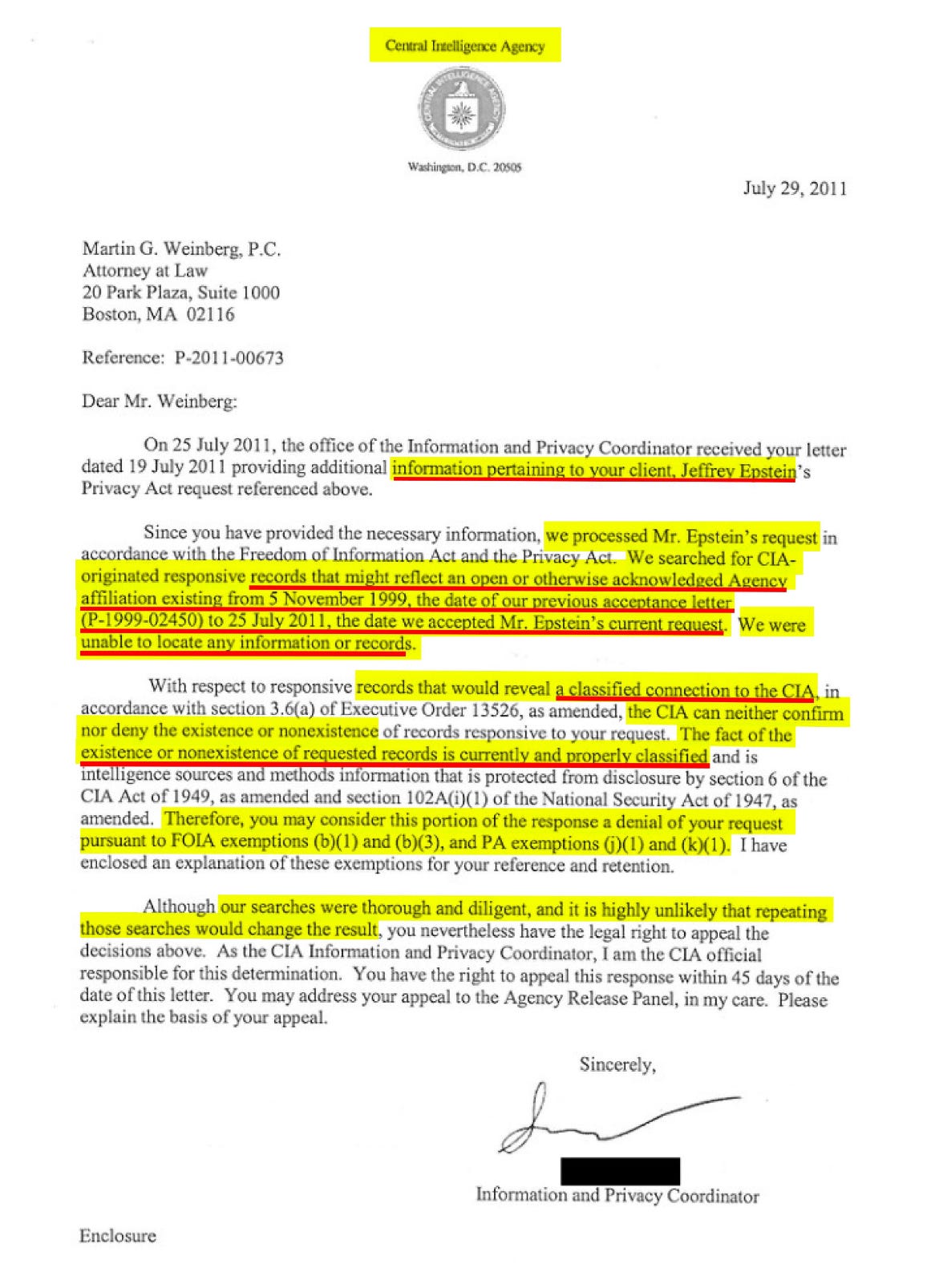
Epstein’s role as an international intermediary is further detailed in records showing his attempts to broker high-level connections between former Israeli Prime Minister Ehud Barak, who served as the head of Aman, the Israeli Military Intelligence Directorate from 1983 to 1985, and former Central Intelligence Agency (CIA) Director Michael Hayden. Epstein also expressed concern regarding the existence of government records detailing his relationship with the CIA. To address this, he initiated an information request with the CIA to determine if any records existed "that might reflect an open or otherwise acknowledged Agency [CIA] affiliation existing from 5 November 1999... to 25 July 2011."
Audio from 2013 reveals Epstein attempting to persuade Barak to collaborate with Palantir, the data-analytics giant co-founded by the influential and often controversial Peter Thiel. In a December 17, 2018, email exchange, Epstein and Barak discussed their perceived associations with Israel’s intelligence agency, Mossad:
Epstein: unfortunately, not. &nbs=; you should make clear that i dont work for mossad. :)
Barak: Yo= or I?
Epstein: that I dont :)
These geopolitical ties are complicated by confidential human source reports that attorney Alan Dershowitz, Sheldon Adelson, Sean Hannity, and Epstein all collaborated together with Mossad. Documents reveal that the informant alleged that attorney Alan Dershowitz was viewed as a figure controlled by Israeli interests and backed by figures like Sheldon Adelson. According to this federal informant, Dershowitz’s eventual shift in support toward Trump was seen not as a political evolution but as a calculated alignment with the preferences of the Israeli government. The files also suggest that influential media figures like Sean Hannity shared similar financial backing from the same billionaire circles. The informant claims that Maxwell and Epstein were not billed for the work performed by Dershowitz’s office.
Internal White House dynamics were also touched by Epstein’s orbit, specifically through his surprisingly close relationship with Bannon. It has been known for a long time that Bannon was helping produce a documentary aimed at rehabilitating Epstein’s public persona before he died. The files include hours of never-before-seen video from that documentary, which among other things show Epstein struggling to directly answer whether or not he is the devil. Nonetheless, the recent documents reveal a much deeper relationship between Bannon and Epstein. The two shared numerous text messages covering everything from television preferences to specific White House policies, even after Bannon’s departure from the first Trump administration. In these private exchanges, they frequently mocked President Trump, with Epstein suggesting that Trump should be termed a “re-grifter” rather than a regifter. Bannon countered with his own derisive monikers, referring to President Trump as a “stable genius” and remarking that he was “out of gas” in response to reports about his limited work schedule.
The released documents have proved particularly damaging for current and future administration officials who previously sought to distance themselves from the financier. In 2025, Commerce Secretary Howard Lutnick had publicly claimed to be so disgusted by a 2005 meeting with Epstein that he vowed never to be in the same room with him again. However, 2012 emails show Lutnick and his wife meticulously coordinating the logistics of docking their 188-foot yacht at Epstein’s private island for a scheduled lunch. The next day, a message from Epstein to Lutnick read “Nice to see you.” Similarly, Kevin Warsh, a prominent pick for the Federal Reserve, attended a large event alongside Epstein.
Elon Musk appears in the files as having once said he “declined repeated invitations” to visit Epstein’s island. However, the documents suggest he tried multiple times to meet Epstein there, going so far as to bemoan on Christmas morning how he could not wait to get away from his children and join Jeffrey. Additionally, while Musk claimed he had no knowledge of Epstein touring SpaceX, emails reveal that Musk confirmed the tour of SpaceX and Epstein thanked him for it.
Thiel and Musk are not the only members of the 'PayPal Mafia' appearing in the Epstein files; they also reveal a relationship between Epstein and Democratic Party megadonor and LinkedIn co-founder Reid Hoffman. Hoffman has publicly expressed “deep regret” for his past association with Epstein, which involved multiple interactions and a trip to Epstein’s private island, Little St. James, in 2014. These documents clarify that Hoffman’s involvement was tied to fundraising for the MIT Media Lab, culminating in his presence at the Lab's controversial 2016 “Forbidden Research” symposium. At this event, Hoffman was the primary funder for the launch of the $250,000 “Disobedience Award,” a prize introduced during a schedule that notably included a panel on “Sexual Deviance” and the use of technology to address pedophilia. Internal MIT reports further reveal that the Lab's director sought Hoffman’s advice on whether to invite Epstein, who was at that time a registered sex offender, to this very conference. While separate logs from the period show that Epstein had even come into possession of Hoffman’s passport.
The shadow of the investigation continues to loom over former presidents as well, with flight records and damning photos indicating that Bill Clinton remained firmly within Epstein’s social sphere. The ongoing refusal of both Bill and Hillary Clinton to comply with congressional subpoenas has created a significant rift within the Democratic Party, pitting an older establishment against younger members demanding accountability.
The Mar-a-Lago Dossier: Surveillance, Redacted Crimes, and the Greene Defection
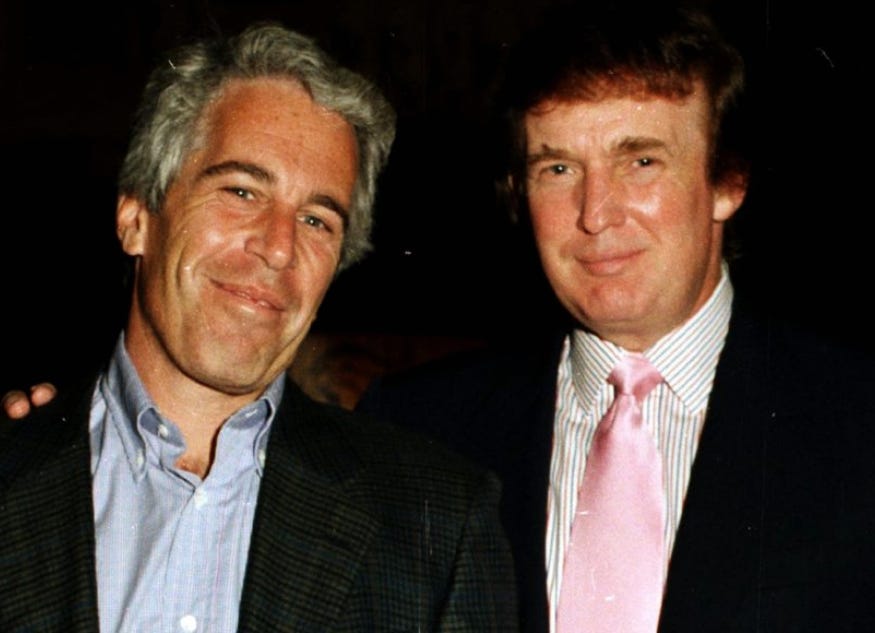
In addition to former President Clinton, current President Donald Trump is in the new files as well. It was known previously that the Trumps were close with Epstein and Maxwell, but the documents reveal a deeper look with Melania writing a fawning email about Epstein and Maxwell in 2002. Other documents reveal that Trump flew on Epstein’s private jet at least eight times between 1993 and 1996, a much higher frequency than previously acknowledged. These flights often included Maxwell and, in one instance, a 20-year-old passenger whose identity remains undisclosed.
The most unsettling entries in the DOJ’s disclosures involve a specific tranche of investigative materials that point to a landscape of extreme violence and intimidation. In August 2025, federal officials, whose names are redacted, assembled a structured summary, essentially a spreadsheet, of more than a dozen tips and unverified allegations specifically regarding Trump and his interactions with Epstein. The day the files were released, this file was briefly taken down by the DOJ. Among the entries are reports that Trump engaged in the forcible rape of young women, made threats against underage girls, and maintained properties where sex crimes and coercion occurred. The summary claims that these tips were later determined to be false. Another person reported that Trump raped her when she was 13 years old. Another said that after being sexually assaulted by Epstein she was “presented” to Trump by Ghislaine Maxwell for a private tour of his Mar-a-Lago property. One particularly harrowing tip included in the files involves an allegation from a woman who claimed Trump witnessed the murder and disposal of her newborn baby in Lake Michigan during a trafficking ordeal in the 1980s. Deputy Attorney General Todd Blanche has dismissed these entries as unfounded or “sensationalist” claims submitted by the public.
The files also reveal that Trump was monitoring the Epstein story during his first term. At the time, his administration was monitoring the travel and flight records of Julie K. Brown, the primary investigative journalist who broke the Epstein scandal open. This surveillance of a member of the press has raised grave concerns about the use of state resources to track those investigating the financier’s inner circle.
In his second term, Trump has relied on the courts to simmer down public disclosure. This includes a billion-dollar defamation suit by Melania Trump against journalist Michael Wolff. Wolff has since countersued, essentially arguing that the administration is using “Strategic Lawsuits Against Public Participation“ or SLAPP tactics to silence his reporting on Epstein’s efforts to leverage information against the President. The lawsuits continue as on February 1, Trump threatened to sue Wolff.
The internal fallout from these files has exposed deep rifts even among the President’s most loyal allies. Representative Marjorie Taylor Greene has publicly broken with the administration, claiming that Trump yelled at her for demanding full transparency because his “friends” would get “hurt” by the revelations.
The Unfinished Ledger: Why the Epstein Narrative Remains Broken
The recent disclosures and the reporting they have sparked continue the unsettling pattern of the Epstein saga, ultimately providing more questions than answers. While the files confirm that the government identified ten indicted co-conspirators, the complete list remains shielded from the public eye. Of these individuals, only three names were released without redaction: retail magnate Leslie Wexner; French modeling agent Jean-Luc Brunel, who died in a Paris jail cell in 2022 while awaiting trial; and Ghislaine Maxwell. This lack of transparency is compounded by Maxwell’s recent court filings, in which she claims that at least twenty-five other accomplices secured secret settlements with the federal government to avoid prosecution.
When Epstein died, he left behind a significant fortune amassed during a decades-long ascent from high school math teacher to the financial confidant of the global elite. Two days before his death, Epstein put his fortune into a trust, making it more difficult for survivors to access. His last will and testament, included in the new documents, offers an evolving list of power players who remained part of his life until the very end. The orchestration of his estate suggests a man who may have accumulated wealth specifically to serve the interests of his associates, an arrangement he seemingly delivered upon in his final acts.
The legal fallout, however, is now moving beyond the individual to the institutions that facilitated his rise. Just last week, a federal judge ruled that a lawsuit brought by Epstein’s victims against Bank of America can proceed, allowing claims that the bank knowingly benefited from and facilitated sex trafficking to move toward discovery.
There is a grim irony at the heart of the current document dump: in a supposed democracy predicated on transparency, it has proven far easier for a citizen to find the names and compromising images of survivors than the names of high-level accomplices.
The fact that the government has struggled to protect the privacy of survivors while successfully shielding Epstein’s most powerful enablers tells you everything you need to know about this case. It is this fundamental imbalance, the exposure of the vulnerable and the protection of the powerful, that ensures the public will remain deeply interested, frustrated, and profoundly skeptical of the official Epstein narrative.
"Want more? Find us and subscribe: DISINFO DETOX PODCAST on YouTube.