

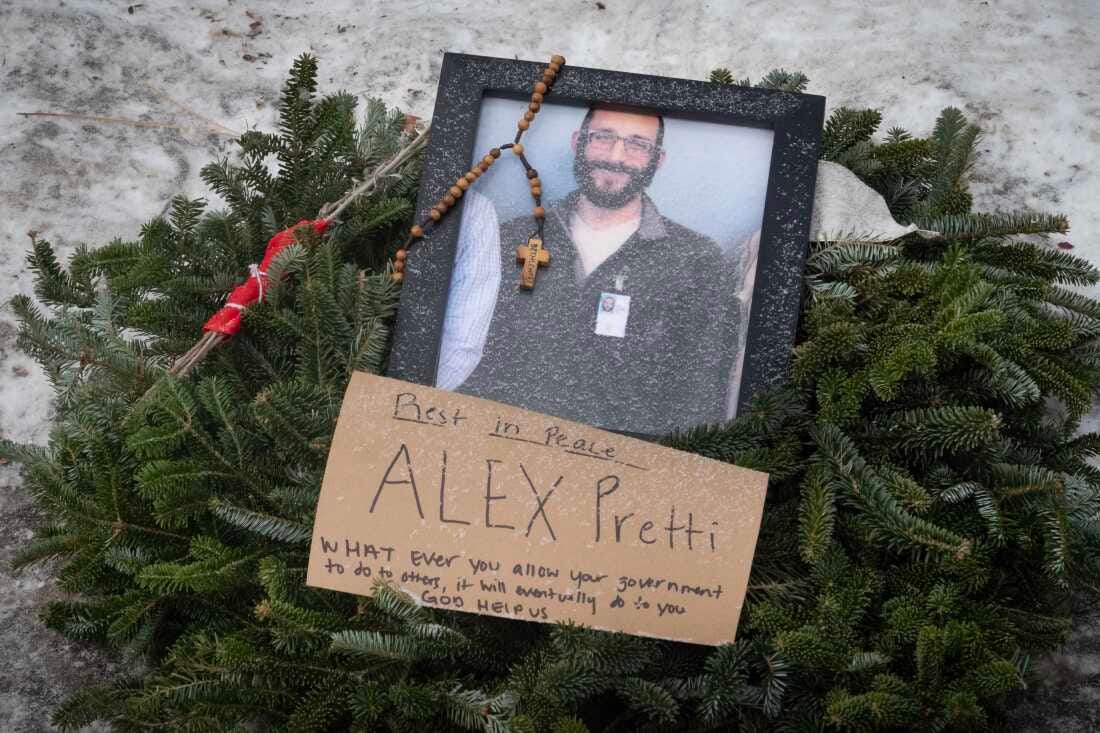
“You talked a lot about Minnesota, Mr. President. Some of your own administration officials have labeled Alex Pretti—” That was all ABC News Senior Political Correspondent Rachel Scott could manage before President Trump cut her off. “By the way, this is ABC Fake News, this one,” he fired back. The January 27 exchange was a microcosm of a larger war for the narrative, as the press and the public demand transparency regarding the federal operations that have turned Minneapolis into a domestic battleground this month.
In early 2026, Minneapolis emerged as the flashpoint for a heated national debate, marking the moment President Donald Trump’s 'Operation Metro Surge' crashed into the reality of local community life. The fatal shootings of Renee Good and Alex Pretti, combined with the detention of five-year-old Liam Conejo Ramos, have sparked widespread outrage and accusations of federal lawlessness. While the administration has consistently framed these events as necessary for public safety and self-defense, a mounting body of video evidence, witness testimony, and local government records suggests a pattern of disinformation designed to shield federal agents from accountability. From the misrepresentation of victims’ criminal histories to the deployment of constitutionally dubious “absolute immunity” claims, the federal narrative is facing its most significant challenge to date.
The Mother and the “Terrorist” Label
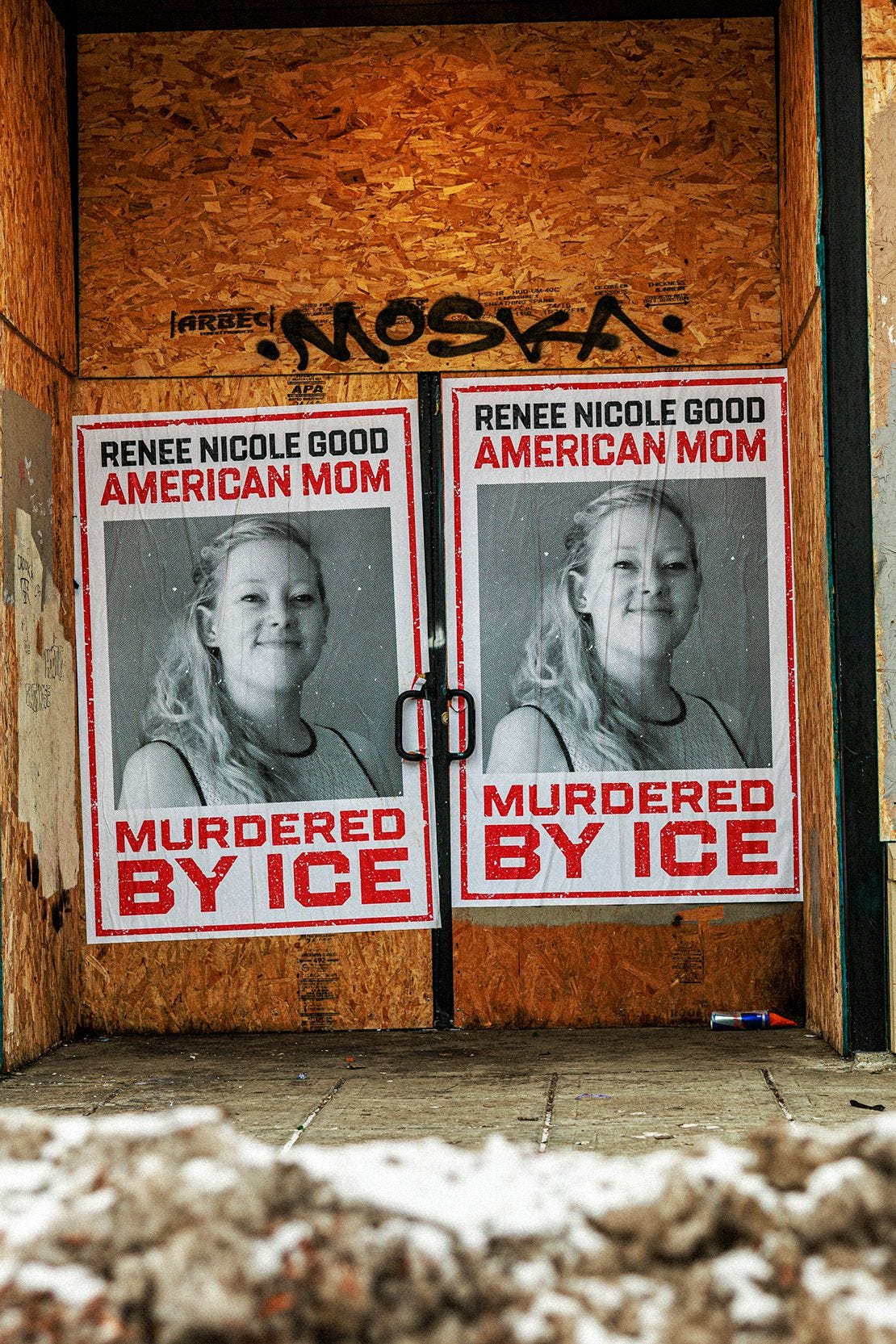
On January 7, 2026, the fatal shooting of Renee Good by United States Immigration and Customs Enforcement (ICE) agent Jonathan Ross in South Minneapolis became the catalyst for a widespread government campaign of disinformation. Immediately following the incident, the administration attempted to frame the killing as self-defense, with President Donald Trump falsely claiming that Good had “viciously ran over” an agent and forced his hospitalization. However, video evidence and investigative reporting from the New York Times revealed that Ross was not run over by the vehicle, walked away from the scene unassisted, and did not seek hospital treatment. Despite official attempts to brand Good a “domestic terrorist” who had been “stalking agents all day long,” records confirmed she was simply a mother who had just finished dropping her child off at school. Demonstrating a clear bias against Renee Good and the underlying facts, the Department of Justice (DOJ) bypassed a civil rights investigation into Ross to focus on Good’s widow.
The Preschooler and the “Bait” Dispute
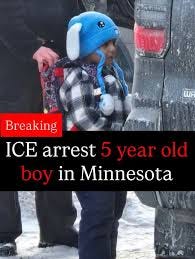
Government disinformation surfaced again on January 20, 2026, following the detention of five-year-old Liam Conejo Ramos by ICE agents in Minneapolis. Despite the Department of Homeland Security (DHS) claims that Liam’s father, Adrian Alexander Conejo Arias, was in the country illegally, records show he held valid status via the previous administration. To date, the Trump Administration has provided no evidence for the arrest, and a judge has since stayed Arias’s deportation.
Contradicting federal officials’ claims that Liam was “abandoned” during the arrest, witnesses and school officials stated they were denied the opportunity to take custody of the child at the scene. This was the fourth incident in two weeks that a student from the same district has been detained. Additionally, DHS was caught spreading false information after deleting a tweet that wrongly accused Arias of bringing his son to a “violent riot.” The pair remain in custody at the South Texas Family Residential Center, a federal facility in Dilley, Texas. On January 27, 2026, a judge temporarily blocked Arias from being deported.
Pardon the interruption! I just wanted to take a moment to thank all of my subscribers. A special shout-out to the paid members who help me bring this information to life every week. If you’d like to support the newsletter, you can become a paid subscriber for just $5 a month. If you can’t swing that right now, no worries! Liking, commenting, and sharing on social media helps just as much. Thanks for being here, and enjoy the rest of the read!
The Killing of Alex Pretti
The initial outrage over Liam’s detention was soon eclipsed on January 24, 2026, by the killing of Alex Pretti, a Minnesota ICU nurse and U.S. citizen, at the hands of federal officials in Minneapolis. Video footage captured Pretti recording federal agents in the street shortly after he had been seen directing traffic. In the recording, Pretti is seen filming agents as they scream at two individuals, including a woman who was thrown to the ground. When Pretti attempted to intervene with his hands raised, officials sprayed him with a chemical agent and forced him to the ground. After disarming him of a firearm he was carrying on his waist, federal agents shot Pretti multiple times, resulting in his death.
The Anatomy of a Narrative
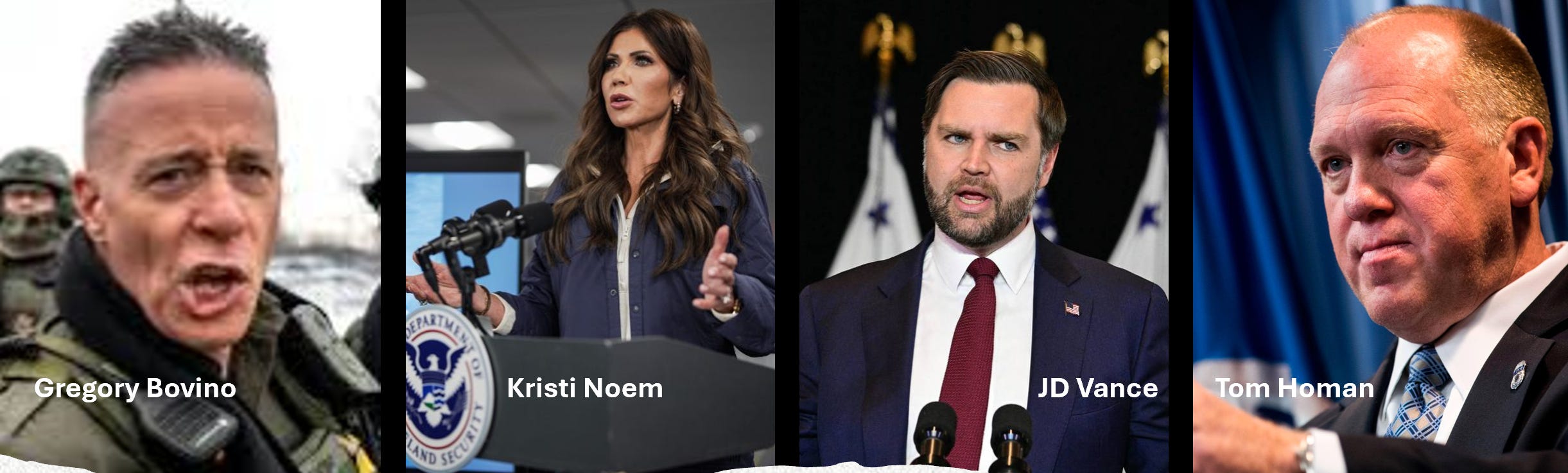
In the hours following the killing of Alex Pretti, the federal government launched a coordinated messaging campaign designed to frame the ICU nurse as a radicalized aggressor. Assistant Homeland Security Secretary Tricia McLaughlin and Border Patrol Commander Gregory Bovino led this effort, issuing statements claiming that Pretti “violently resisted” and that agents were forced to fire “defensive shots.” This narrative was immediately amplified by high-ranking political figures, including White House Senior Adviser Stephen Miller who referred to Pretti as a “domestic terrorist,” and “would-be assassin,” while McLaughlin suggested Pretti had arrived on the scene intending to “massacre law enforcement.” DHS Secretary Kristi Noem referred to Pretti’s actions as an “act of domestic terrorism.”
However, this assassin narrative was quickly dismantled by video evidence and public records. Footage of the encounter reveals that Pretti’s firearm was never drawn; the weapon remained secured in its holster until a federal agent removed it. The video confirms that Pretti had his hands raised in surrender, and was already sprayed with a chemical agent and pinned to the ground, effectively disarmed, when a second agent shot him repeatedly.
The federal government also attempted to justify the intensity of the operation by disparaging those involved, but these claims also fell apart under scrutiny. Commander Bovino asserted that Pretti had interfered with the arrest of Jose Huerta-Chuma, whom he described as a violent criminal. Minnesota state officials took the rare step of publicly disputing this, noting that their data and court records showed Huerta-Chuma had no felony record and had never even been in state custody.
The Second Amendment Paradox
As the Trump Administration’s claims about the incident collapsed under the weight of the evidence, they pivoted to assassinating Pretti’s character. These efforts focused on engendering suspicion and false claims of illegality regarding Pretti’s lack of physical identification at the scene. FBI Director Kash Patel “You cannot bring a firearm loaded with multiple magazines to any sort of protest that you want. It’s that simple. You don’t have the right to break the law and incite violence.” Similarly, Treasury Secretary Scott Bessent claimed the death could have been avoided if Pretti brought a homemade sign instead of a gun to the confrontation: “I am sorry this gentleman is dead, but he did bring a 9 mm semi-automatic weapon with two cartridges to what was supposed to be a peaceful protest.” The administration shared an image of a gun and extra ammunition it said Border Patrol agents took from Pretti to stoke public support for the murder.
In Minnesota, individuals with a permit are legally allowed to carry a firearm in public, whether concealed or not, and state law does not prohibit carrying a weapon during a demonstration. Despite this, federal officials and their supporters falsely claimed that Pretti was committing a crime because he did not have his physical identification on him at the time. This argument fails under even basic scrutiny: first, the officers could not have known he lacked ID until they searched his pockets after he was already dead. Second, failing to carry a permit is not a capital offense that justifies immediate execution. Third, even if it were a major crime, the U.S. legal system guarantees a right to a trial, not an execution on sight. Finally, under Minnesota law, carrying a legal firearm without the physical ID is a minor “fix-it“ citation; had Pretti been cited, he simply would have needed to present his ID at a police station to have the citation dismissed.
On a broader scale, the condemnation of Pretti highlights deep ideological inconsistencies regarding the Second Amendment. Over the last decade, the MAGA movement has lauded figures like Kyle Rittenhouse for carrying firearms at protests, featured couples who brandished weapons at Black Lives Matter demonstrators at the Republican National Convention, and defended the rights of Michigan protesters to bring semi-automatic rifles into the state capitol. While many liberals previously criticized that behavior, the Pretti case has seen a total reversal of roles, revealing that hyper-partisanship has superseded core principles for both sides. Furthermore, while MAGA supporters have frequently defended the shooting of unarmed Black people by claiming victims would avoid execution if they simply comply with police and keep their hands up, Pretti followed those exact instructions and was murdered anyway.
This sudden shift in rhetoric was not lost on the National Rifle Association (NRA), which found itself in the rare position of disputing its long-time allies on the right. In the wake of the disinformation regarding Pretti’s weapon, the NRA expressed significant ire over the blatant disregard for his right to carry. This defense marks a striking fracture in the conservative coalition, as the organization moves to protect a right that usually finds its most staunch, though apparently selective, defense in those very same circles.
Collective Guilt and the Legal Distortion
A final pillar of the administration’s disinformation campaign is fundamentally antithetical to American jurisprudence: the notion that the actions of a few can justify the extrajudicial killing of an individual. While supporters of the administration attribute violence against protesters to a “climate” created by political opponents, this logic ignores a bedrock legal principle: an individual cannot be held liable for the prior actions of a group, regardless of their association.
This logic seems lost on Vice President JD Vance, a law school graduate, who attempted to redirect the public’s horror toward local Minneapolis officials. Vance accused the city of engendering the disorder. His evidence was an alleged incident where federal agents were “doxed” and “mobbed” at a restaurant while local police supposedly refused to help. Similarly, Trump and Fox News Channel blamed the murder of Good and Pretti on the “Radical Left,” suggesting that the mere existence of people using their first amendment rights to peaceably assemble and free speech creates an environment that justifies the use of lethal force. He called it “morally repulsive.”
Vance’s erosion of constitutional standards extended well beyond the First Amendment. He sought to legally defend a memo authorizing federal agents to enter private residences without judicial warrants, a flagrant violation of the Fourth Amendment. This defense relied on the strategic conflation of administrative warrants with judicial ones, ignoring the distinct legal boundaries between the two.
This disregard for judicial standards extends from the interpretation of warrants to the active obstruction of justice in the cases of Good and Pretti, where federal interference has systematically blocked the path to accountability. The Department of Justice’s Civil Rights Division, led by political appointees, has taken the extraordinary step of refusing to open or hindering investigations into either shooting, a move that prompted a wave of resignations from career federal prosecutors and the supervisor of the FBI’s Minneapolis public corruption squad. State and local authorities have found themselves in an unprecedented legal battle against the federal government just to access basic evidence. In the meantime, they are unable to accurately investigate the murders of Good and Pretti.
Critics contend that the federal government avoids investigations because they know that their cases are based on lies and distortions. Indeed, In Chicago, the administration’s “Operation Midway Blitz” has faced significant judicial pushback, with roughly half of all non-immigration criminal cases either being dismissed or resulting in acquittals.
The Institutional Crack and the Federal Retreat

The legal and political fallout from the Minneapolis operation has created a rare fissure within the conservative establishment. In addition to harming the relationship with the NRA, John Mitnick, a prominent conservative attorney who served as the DHS’s General Counsel during Trump’s first term, issued a blistering condemnation of the agency he helped build. “I helped to establish DHS in 2002 and 2003 and later had the homeland security portfolio as a White House Counsel and served as General Counsel of the Department. I am enraged and embarrassed by DHS’s lawlessness, fascism, and cruelty. Impeach and remove Trump—now” Mitnick posted. This sentiment has spread to the Senate, where Republicans like Lisa Murkowski and Thom Tillis have joined Democrats in calling for the dismissal of Noem as the DHS Secretary. Trump has said he is not dismissing Noem.
Facing a collapse in public trust, with only 20% of the public believing the Pretti shooting was justified, the White House has entered a period of frantic damage control. President Trump has signaled a desire to “de-escalate a little bit“ in Minnesota and has sidelined the architect of the policy, Stephen Miller, from a meeting on the matter. In a rare admission of potential fault, Miller recently acknowledged that agents “may not have been following” established protocols during the Pretti encounter. Similarly during a press conference in Minneapolis, Vance performed a striking about-face, denying his previous claims that federal agents enjoy “absolute immunity“ from prosecution while simultaneously insisting that a robust investigation into the Good shooting was underway, a claim directly contradicted by Deputy Attorney General Todd Blanche. The public backlash has also led to a reshuffle, Commander Bovino has been stripped of his “commander at large“ title, replaced by White House Border Czar Tom Homan.
Conclusion
Ultimately, the events in Minneapolis reveal a troubling architecture of state-sponsored disinformation. By branding a grieving mother a “terrorist” and an ICU nurse an “assassin” before the smoke had even cleared, the administration prioritized narrative control over constitutional fidelity. The subsequent reshuffle, stripping Bovino of his title and sidelining Miller, functions as little more than a coat of fresh paint on a crumbling, old policy.
By replacing one hardline architect with another in Homan, the administration attempts to assuage public anger without dismantling the culture of “absolute immunity” that led to these fatalities. This tactical retreat suggests that the federal operations in Minnesota were not merely about the facts of the shootings, but about an administration using cosmetic personnel changes as a distraction. For now, it remains to be seen if this pivot reflects a genuine shift in governance or is simply the latest tool in a sophisticated kit of disinformation designed to shield federal power from public accountability.
🔥 Cut Through the Noise – The Disinfo Detox Podcast
Good news! The Disinfo Detox is now on Substack! Get sharp, no-BS takes on politics, AI, and higher education—stuff mainstream media won’t touch.
Want to support the podcast? Here’s how:
👉 Like, subscribe, and hit the 🔔 on YouTube
👉 Subscribe to this Substack for just $5/month to spread media literacy, fight disinfo, and amplify truth-tellers
⚡ Your 3-click favor (takes 10 seconds, makes a huge difference):
1️⃣ Click any episode link below
2️⃣ Smash 👍 & drop a comment
3️⃣ Hit 🔔 to subscribe
💥 Every click helps fight disinfo. Be part of the antidote—subscribe, comment, and share!